CAREER LONGEVITY
Tiny Habits, Big Results: A 7-Step Behaviour-Change Framework For Fitpros

Behaviour science gives us a way forward. Instead of asking clients to rely on motivation and discipline, we can help them design tiny, well-anchored habits that fit into real life. Below is a practical framework you can use in your coaching, PT, exercise physiology, or nutrition practice.
From Motivation to Mechanism: Why Smaller Behaviours Work Better
Traditional goal-setting often pushes clients toward big, impressive targets: “train five days a week,” “cut out sugar,” “no screens after 8 pm” These look good on paper, but they depend heavily on motivation. As soon as life gets busy, these goals are usually the first to fall apart.
Habit research points to a different approach:
- A cue in the environment
- A behaviour that’s realistic in that context
- A reward that makes the brain want to repeat it2
BJ Fogg’s work emphasises shrinking the behaviour to the point where it feels almost effortless, so it can happen even on low-motivation days.¹ For health and fitness professionals, this means one of your most powerful tools is to deliberately prescribe behaviours that feel ‘too small’ at first, then build up from there.

STEP 01
Narrow the Focus to One Clear Behaviour
- Movement (steps, strength, mobility, sitting breaks).
- Nutrition (meal patterns, snack choices, beverage intake).
- Recovery (sleep routine, rest days, stress relief) Then turn that into a clear, observable behaviour:
- “Walk for at least 10 minutes on 4 days this week”.
- “Add a serving of vegetables to lunch and dinner on weekdays”.
- “Start a wind-down routine by 10:30pm on work nights”.
STEP 02
Design the ‘Tiny’ Version First
- Walking: “Walk to the end of the street after lunch”.
- Strength: “Do one to two bodyweight exercises after brushing your teeth”.
- Nutrition: “Include one handful of ready-to-eat vegetables at one meal”.
- Sleep: “At 10pm, dim the lights and plug in the phone outside the bedroom”.


STEP 03
Anchor New Habits to Existing Routines
Many clients don’t fail because they’re unwilling – they fail because they forget. Anchoring new behaviours to reliable daily routines solves part of this. Use a simple cue–action formula with clients:
“After I [CURRENT ROUTINE], I will [TINY HABIT].”
Examples in a health and fitness context:
- “After I finish my morning coffee, I will drink a full glass of water”.
- “After I log off work, I will walk for three minutes before checking my phone”.
- “After I brush my teeth at night, I will do 30 to 60 seconds of stretching”.
STEP 04
Treat Environment as Part of the Program
We often program sets and reps, but overlook the environment those behaviours have to live in. Yet research in behavioural economics and public health shows that defaults, visibility, and friction heavily shape health decisions – even among experts³.
Help clients ‘program’ their environment just as intentionally as their training:
For nutrition
- Put washed, ready-to-eat produce at the front of the fridge.
- Move calorie-dense snack foods out of sight and reach.
- Keep a water bottle visible on the desk or kitchen counter.
For movement
- Keep walking shoes and a jacket by the door.
- Place a yoga mat or dumbbells where they work or watch TV.
- Use screen-time reminders as cues for standing or stretching breaks.
For movement
- Relocate device chargers from the bedside table to somewhere outside the bedroom, to reduce late-night scrolling opportunities.
- Use blackout curtains or an eye mask for consistent darkness.
- Keep a notepad near the bed for a quick ‘brain dump’ instead of making notes on your phone.
Framing these as core interventions, not add-ons, can help clients see that change isn’t just about trying harder; it’s about setting up a smarter context.


STEP 05
Swap Perfect Streaks for Weekly Minimums
- “Accumulate at least three structured training sessions this week”.
- “Walk on at least four days this week, for any duration”.
- “Have a planned, protein-rich breakfast on at least five days”.
STEP 06
Use Light-Touch Tracking as a Coaching Tool
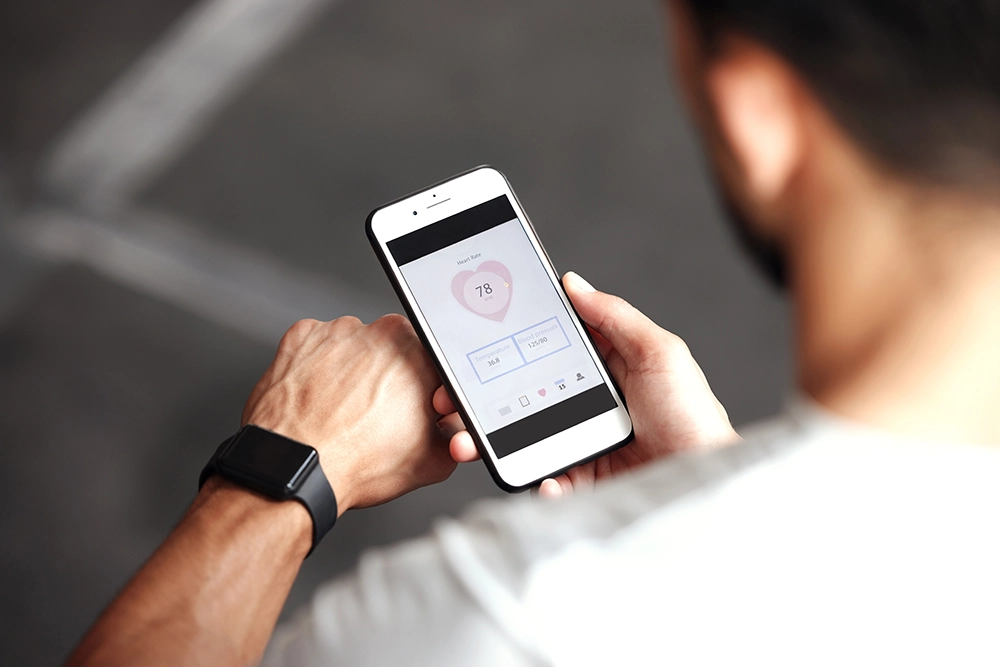
- A calendar with a quick symbol (✓, dot, or color) for each completed habit.
- A one-minute daily check-in form you review together each week.
- A note on their phone: “Today’s movement / meals / sleep / etc”.

STEP 07
Build Self-Compassion Into Your Coaching Language
- Normalising lapses: “We planned for four sessions, you got two. That’s progress, and useful information”.
- Reframing: “This isn’t about you lacking discipline; it tells us the plan didn’t fit your week”.
- Co-creating a simple ‘reset’ script for clients to use when they miss: acknowledge, learn, choose the very next small action.
How to Start Using This Framework Next Week
To bring this into your day-to-day work:
- With each client, choose one primary focus behaviour for the next two to four weeks.
- Define a tiny, context-linked version of that behaviour.
- Identify at least one environment change to support it.
- Set flexible weekly minimums, not rigid streaks.
- Add a simple tracking method and review it together.
- Use self-compassionate language when you debrief lapses.

References
- Fogg, B. J. (2019). Tiny Habits: The Small Changes That Change Everything. Houghton Mifflin Harcourt.
- Wood, W., & Runger, D. (2016). Psychology of habit. Annual Review of Psychology, 67, 289–314.
- Thaler, R. H., & Sunstein, C. R. (2008). Nudge: Improving Decisions About Health, Wealth, and Happiness. Yale University Press.
- US Department of Health and Human Services. (2018). Physical Activity Guidelines for Americans, 2nd edition.
- Michie, S., Abraham, C., et al. (2009). Effective techniques in healthy eating and physical activity interventions: A meta-regression. Health Psychology, 28(6), 690–701.
- Sirois, F. M., et al. (2015). Self-compassion and health-promoting behaviours. Health Psychology, 34(6), 661–669.

Tony Attridge
Tony is the Founder of The College of Health and Fitness. Find out more about continuing your education and check out the courses and short courses at cohaf.edu.au.