Career Longevity
The Long Game: Lessons from 38 Years in the Fitness Industry

Most personal trainers leave the industry within five years. After 38 years on the floor – having athletes at every Olympic Games since Atlanta ’96 – Tony Attridge has watched generations of brilliant young trainers burn bright and disappear. The ones who stayed weren’t the most talented. They were the ones who understood a few unglamorous truths early. Read on to learn more.
Here’s what actually separates a career from a phase.
Stop trading hours for dollars (eventually)
One-to-one PT has a ceiling carved out by the laws of physics. Because you have a finite number of hours, a finite amount of energy, and a body that ages. If your income depends entirely on showing up in person, your career will end the day your body says ‘no’.
The trainers I know still earning well in their 50s and 60s built assets alongside their hours: group programs, online coaching, products, courses, books, speaking gigs. Write the program once, sell it a hundred times. Start the asset before you need it – ideally, a decade before you need it.
Reinvent every five to seven years
The skills that paid in 1995 (high-impact aerobics, big-box gym floors) didn’t pay in 2005. The 2005 model (one-to-one, hourly) is being eaten alive by 2025’s hybrid, online, AI-assisted coaching. None of this is a threat unless you ignore it.
Audit your offering every couple of years. Ask honestly: would I still bet on this in five years? If the answer is ‘no’, then start building the next thing now, while the current thing still pays the bills.
Train yourself like you train your clients
The 35-year-old trainer with chronic back pain didn’t get unlucky. They got predictable. They coached movement all day and never programmed their own recovery, sleep, or strength work.
You are the equipment. Service it. Get your own coach. Schedule recovery the way you schedule clients. The trainers who lasted four decades did not do it on adrenaline and protein bars.
Run it like a business, not a hobby with invoices
Most PTs are world-class technicians and rank amateurs at business. They can write a six-week hypertrophy block in their sleep but can’t tell you their gross margin, client acquisition cost, or lifetime value.
Spend as much time studying business as you spent studying anatomy. Get a coach, mentor, or accountant who is older and wealthier than you. Track the numbers monthly. Boring? Yes. Survivable? Also,
Niche deep, read wide
The trainer who serves everyone, serves no one memorably. Pick a population – post-natal, youth athletes, masters athletes, return-to-sport, executives – and become known for your expertise in that area. Depth generates referrals; ‘general PT’ generates Google ads.
At the same time, never let your reading stay narrow. The best programming ideas in the last decade have come from physio, neuroscience, behavioural psychology and education – not the fitness industry itself.
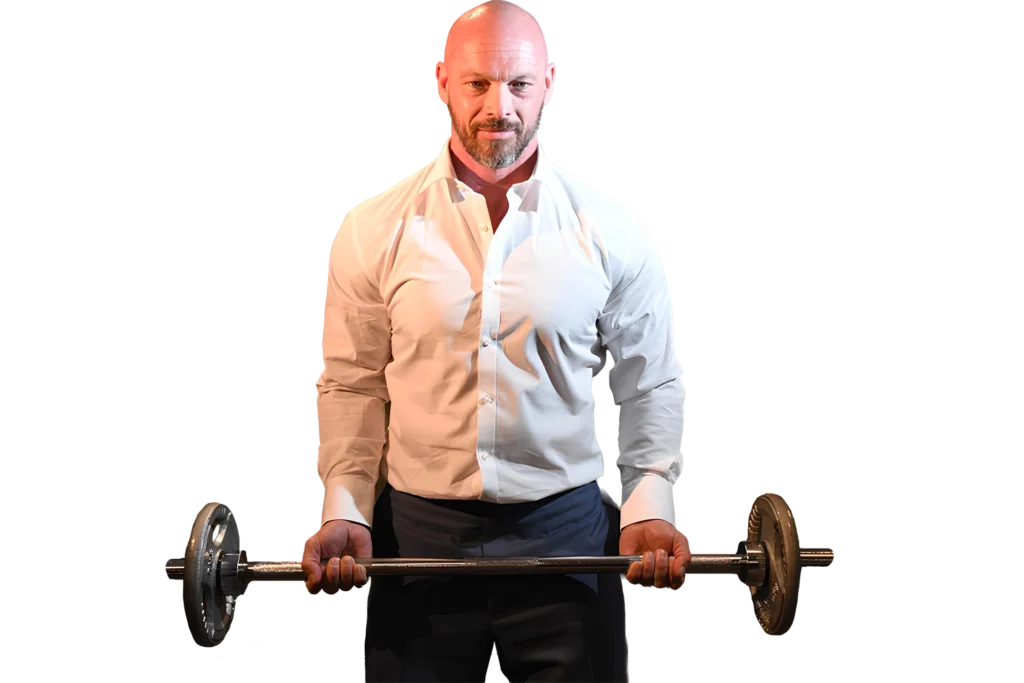
The unglamorous truth
There’s no secret here. The trainers still standing after 30+ years in the industry didn’t have magic insight. They built assets, reinvented before they had to, looked after their body, ran their numbers, and went deep in a niche while reading wide.
It’s a long game, so play it like one.

Tony Attridge
Tony has spent 38 years in the fitness industry – coaching, mentoring, and educating the next generation of professionals. Since 1996, he has trained athletes competing at every Olympic Games, and in 2002 he founded The College of Health and Fitness (TCOHAF), now in its 24th year as a continuously ASQA-registered RTO delivering nationally recognised qualifications across fitness, health, business and community services. Tony is co-author of The Essential Guide to Fitness for the Personal Trainer (Pearson Education), was named Outstanding Leader of the Year at the 2024 Education 2.0 Conference, and is currently undertaking a Doctor of Business Administration at Walsh College.