first aid
Why Breathing is the Backbone of First Aid
It’s easy to take breathing for granted — until someone stops. In the world of first aid, how you respond to a breathing emergency in those first critical minutes can mean the difference between life and death.
For someone with no medical background, what does ‘breathing’ actually mean in a first aid context?
There are really two scenarios.
If you arrive at a scene and someone is breathing but unconscious, the priority is to roll them into the recovery position. That one action protects and maintains their airway — it’s simple, but it saves lives.
The other scenario is CPR.
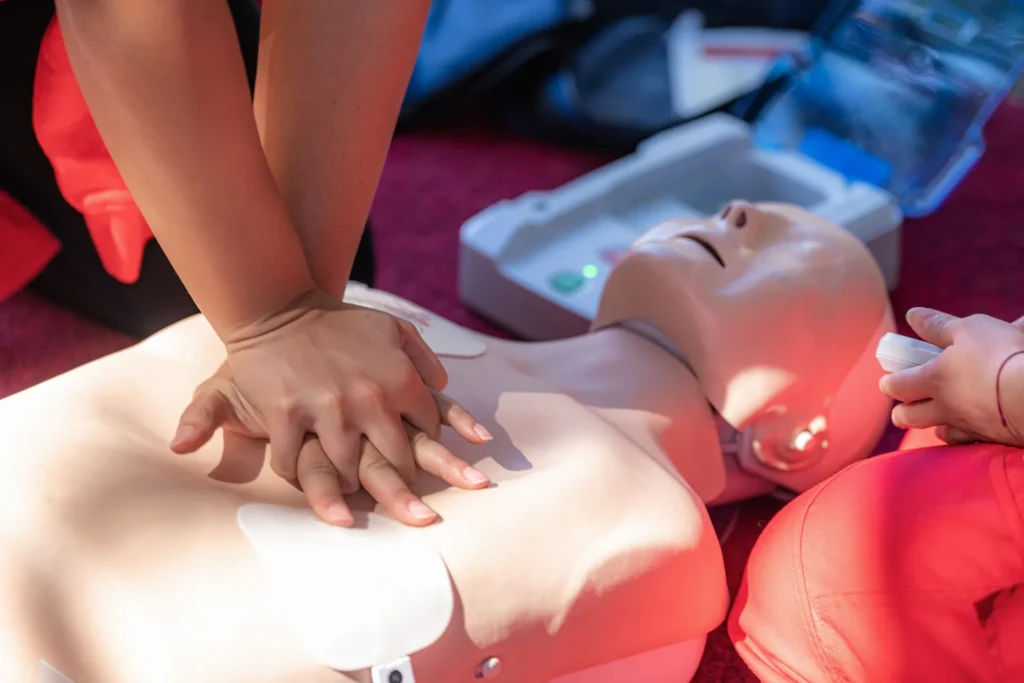
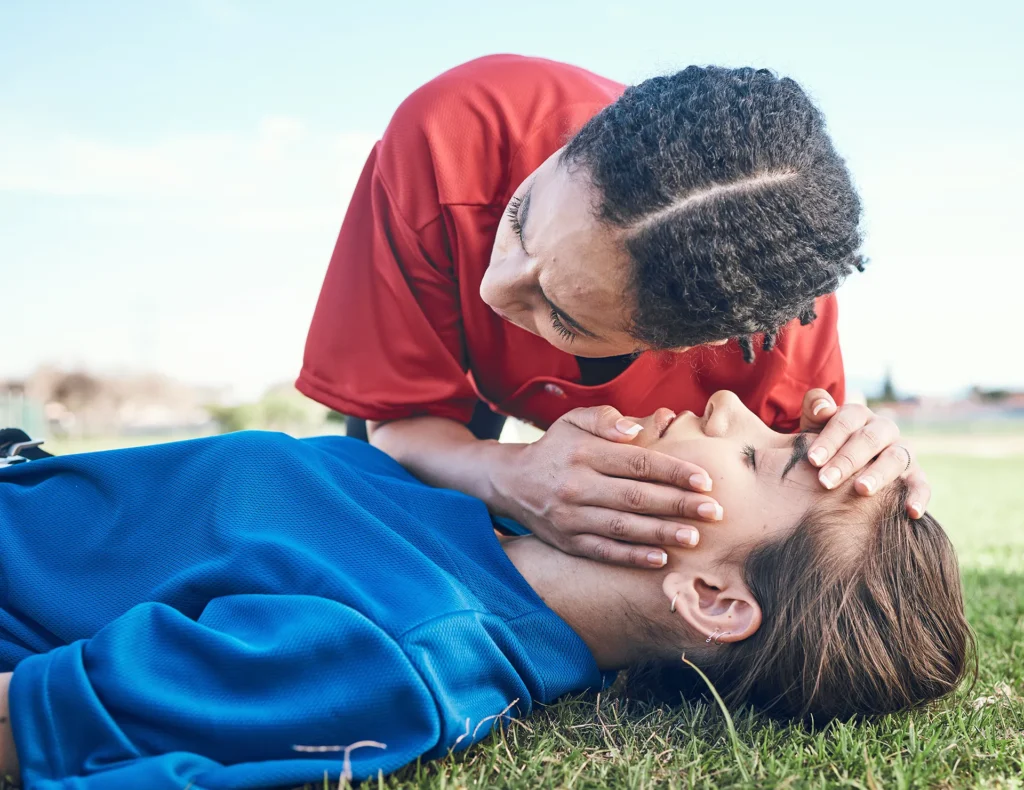
When someone’s heart has stopped, we do 30 chest compressions followed by two rescue breaths. The compressions pump blood around the body, but the rescue breaths are what keep that blood oxygenated. Without oxygen, the brain starts to suffer — and the window is short. We’re talking about four minutes before brain cells begin to die.
So, rescue breaths are non-negotiable?
Rescue breaths are technically optional — if there’s significant facial damage, or you genuinely don’t feel safe to do them, compressions alone are still better than nothing. But if you can deliver rescue breaths, you absolutely should.
Compressions without breaths are an interim measure only. The goal is always 30 compressions to two breaths, as soon as it’s safe to do so — ideally with PPE from the first aid kit.
The four-minute mark matters a lot. Here’s why: adults do have a small reserve of oxygen in their system, but it runs out fast so every second counts; which is why getting the right technique in place quickly is so critical.
What are the common mistakes people make?
Effective CPR isn’t just about doing something; it’s about doing it correctly. For compressions, the correct technique is to push to one-third the depth of the chest, at a rate of 100 to 120 compressions per minute. Too fast, too slow, too shallow — and you’re not actually circulating blood effectively.
When it comes to rescue breaths, people often get these three steps wrong:
- You want to ensure a full head tilt to open the airway. If you skip the head tilt, you won't see the chest rise, which means air isn't getting through.
- Pinch the nose to seal it.
- Tuck the chin, as this brings the tongue forward and clears the airway.
And, if you’re leaning over the casualty without clearing that airway properly, you’re working against yourself.
What should a student actually remember when they walk out of a first aid class?
Three things: look, listen, feel — that’s your breathing assessment.
If they’re breathing, recovery position. If they’re not, you’re going into CPR. And in CPR: depth and timing, and your 30 and 2. If a student has those three anchors, they’ve got something to work with when things get real.”
What about fear of contamination?
Since COVID, a lot of people have become very hesitant about physical contact with a casualty. This is understandable, but the risk of catching something from delivering rescue breaths to an unconscious person is genuinely very low. We give students face shields throughout training, and in a real scenario, you should be sending someone to retrieve the first aid kit and PPE while you work. The fear is real, but it shouldn’t be paralysing.
A word for trainers: how do you keep your teaching current?
For first aid trainers, Dee has one piece of advice, which is: stay up to date.
The Australian Resuscitation Council guidelines change regularly, and if you’re still teaching an old version, then your students are leaving with outdated information. That’s not just a training quality issue — it has real consequences for casualties.
Reading and following the ARC guidelines is free, it’s accessible, and it keeps you credible. The National Institute of First Aid Trainers (NIFAT) also offers great professional development. There’s really no excuse for not staying current.
What's the one thing you'd say to someone who's just read this and feels underprepared?
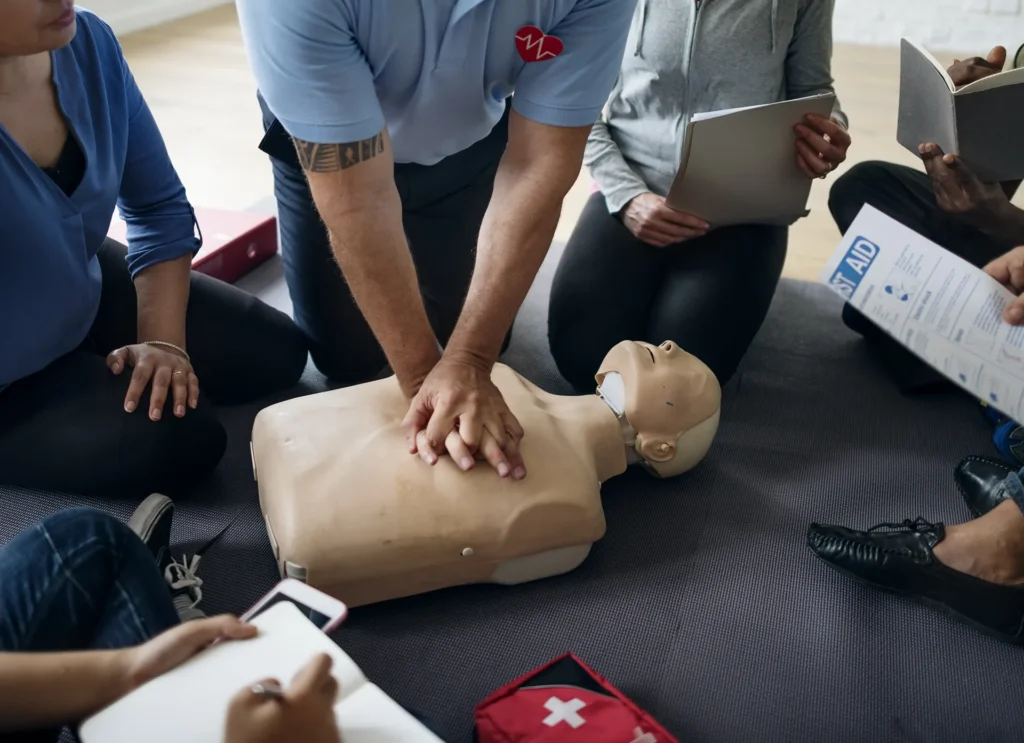
Book into a first aid course. Only about 5% of Australians are trained in first aid. That means in a crowd of 20 people, you might be the only one who knows what to do. That’s a significant responsibility — and also a significant opportunity. The more people trained in bystander first aid, the better the odds for anyone who needs help before emergency services arrive.
FITREC members receive 10% off their booking with ABC First Aid. Visit abcfirstaid.com.au and enter code FITREC10 at the checkout.

Dee Heffernan
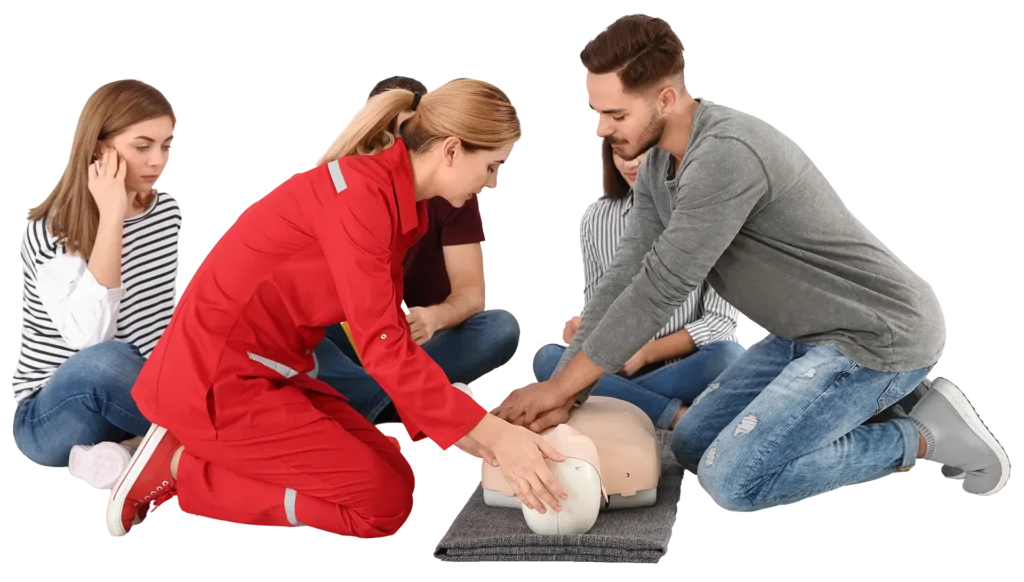
Dee is a Trainer and Assessor and Training Partner of ABC First Aid, which is a national provider of first aid training across Australia, supporting both individuals and organisations through accredited courses. Whether you’re looking to complete your first first aid certification, build on existing skills, or explore a training partnership for your organisation, ABC First Aid offers flexible options across the country.